Jan Kinner
for Congress
Fighting for Ohio's 10th District
Building a stronger future for working families, small businesses, and our communities. Together, we can create real change that matters.
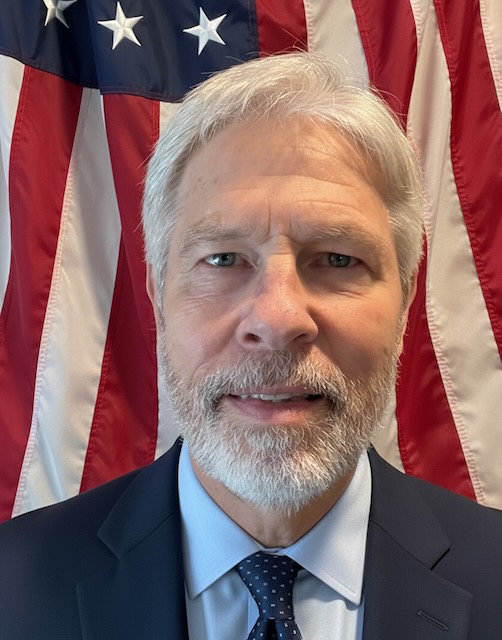
Fighting for Ohio's 10th District
Building a stronger future for working families, small businesses, and our communities. Together, we can create real change that matters.
Jan is a Democratic candidate for Ohio’s 10th Congressional District.
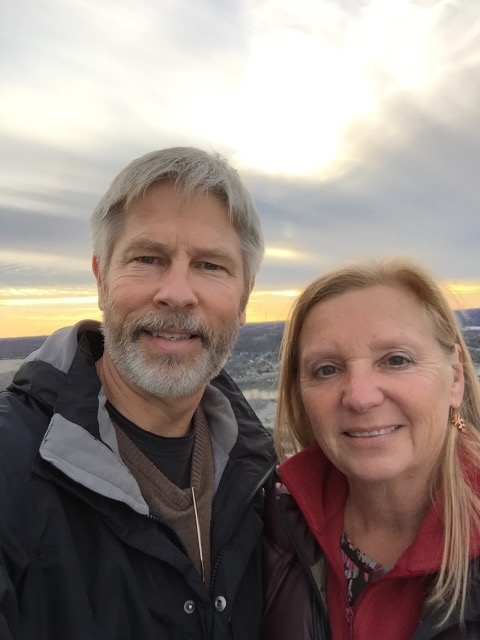
He is a retired Air Force Colonel with many assignments at Wright-Patterson AFB. Following his military service he worked in the private sector for five years as a Senior Consultant, Vice-President and Director before returning to the public sector as a professor at the Defense Acquisition University in Kettering where he helped prepare senior government personnel who manage large, complex programs for the Department of Defense. His expertise is in the areas of Information Technology, Program Management, Contracting and Critical Thinking. He has three Masters degrees and insatiable quest to learn something new everyday. He is a certified volunteer Senior Health Insurance Information Program counselor for Ohio in which he helps people navigate the Medicare maze and he also volunteers at a local thrift shop which donates all of its proceeds to local charities. He and his wife, Susan, live in Kettering and have a son, Ian, who lives in Beavercreek and a daughter, Margaret, who lives with her husband, Brian, in Xenia.
Jan is seeking to win the May 5th Democratic primary so he can restore trust in government by serving all constituents with integrity, courage, and a commitment to addressing the needs of working families
In a healthy democracy power is divided among different branches of government, leaders follow the law, and people are free to speak, protest and vote. Recent actions by the federal government such as stifling dissent and speech, using the military for domestic control, persecuting political opponents, defying court orders, manipulating the law to stay in power, declaring national emergencies on false pretense, marginalizing minority groups, and controlling information and media are all flashing warning signs our democracy is sliding toward an autocracy. Click here to learn more about this problem and Jan's plan of action.
Today, America is divided not just by party lines, but by economic fault lines that have shattered communities across Greene, Montgomery, and Butler counties. While some point to record stock market highs as proof of a booming economy, those gains don't reflect the reality for working families in our district. For them the economy isn't measured by the S&P 500, but by their bank balances. Click here to learn more about this problem and Jan's plan of action.
Our country, America, the bastion of democracy, the land of hopes and dreams, was built by strangers that became known as Americans. Today, immigration is a "hot button" subject perpetuated by those who want to blame people that don't talk or look like them for many of their troubles or the troubles of others. And we've seen the result: Federal para-military forces deployed to Minneapolis, Los Angeles, Chicago, and Portland against the objections of state and local officials; American citizens illegally detained and arrested; American citizens killed. Click here to learn more about this issue and Jan's plan of action.
Since ChatGPT launched in 2022, AI capabilities have advanced dramatically across nearly every dimension with new capabilities being delivered monthly. AI companies have moved beyond Generative AI and are now deploying AI agents (Agentic AI) that don't require human intervention. Concerns about AI safety, usage, deployment, and job displacement are being raised. Click here to learn more about AI and Jan's plan of action.
This is a problem most politicians don't like to talk about and few citizens have even heard or read about. It's a problem that has been around for decades, that both parties have perpetuated, and it's getting worse every day. The longer Congress waits to act - to rebalance spending and revenue - the more drastic the action will have to be, and the greater the negative impact on economic growth and our capacity to allocate our resources to modern needs and opportunities. Click here to learn more about this issue and Jan's plan of action.
For millions of working Americans, the fear of getting sick isn't just about health — it's about financial survival. Despite being employed, millions of workers find themselves caught in a widening gap between what they earn and what it costs to stay healthy. Two forces are squeezing them from both sides: wages that have barely budged in real terms, and health insurance premiums that seem to climb every single year. The result is a quiet crisis playing out in kitchen-table conversations, the constant juggling of bills, skipped doctor visits, and the fear of falling further and further behind across the country. Click here to learn more about this issue and Jan's plan of action.
Order a sign. Join our grassroots movement. Help with phone banking, canvassing, and community events.
Get the latest news, event invitations, and updates from the campaign trail.
Since ChatGPT launched in November 2022, AI capabilities have advanced dramatically across nearly every dimension. More models and updates to existing models are being released almost monthly. For example, there is Chat GPT, Claude, Gemini, Mistral, DeepSeek, MoonShot – which use Generative AI to do such things as build a website, generate images and videos, problem-solving, coding, and document processing and summarization.
Now, just a few short years after the release of Chat GPT companies are now deploying sophisticated AI agents (AKA "agentic AI") that can, without human intervention, analyze situations, set goals, reason through multi-steps, uses tools, coordinate work with other agents, adapt to change and continuously self-improves. This shift transforms AI from just being a source of information and insights into a system that can perform in a different capacity - with little human intervention or completely autonomously.
Generative and Agentic AI technology is being rapidly adopted across organizations and companies and is increasingly visible in everyday life in things like search engine results, customer service, education, manufacturing, finance, marketing, health care and its use is growing as the AI companies continue to release enhancements to their models.
While many politicians and company executives tout the benefits of AI, such as productivity gains and efficiency, few discuss the possible implications and consequences associated with the adoption of that technology, though many in the industry are starting to sound alarms, while those in Congress remain silent.
When AI was first released the developers of that technology claimed AI would replace clerical, customer service and manufacturing jobs "in a few years." As the pace of AI technology has increased, and its adoption widened, some having jobs considered low-skilled, but highly repetitive have been laid off, but white collar jobs in human resources, legal, marketing, medical, finance & accounting, and sales jobs are now being threatened.
This has increased the debate about the future of work: Whether AI will augment or automate a person's work. AI operates without downtime, 24/7, doesn't require traditional wages, benefits or breaks. IF AI performs tasks/jobs that previously employed dozens or hundreds of workers in Montgomery, Greene or Butler counties, the obvious question is what are humans supposed to do for income?
Some talk about "creative destruction" and the creation of new, but unknown jobs, but the reality is many occupations, even within the 10th US District, include tasks susceptible to automation that could disappear altogether. Already, there are manufacturing companies, in some parts of the world, running "lights-out" factories where robots and AI allow production to run 24/7 with no human labor.
As machines become better substitutes for human labor, workers will lose bargaining power and become more dependent on those who control the technology leading to even greater inequalities in income, wealth, and power. Trump said the purpose of his tariffs was to bring manufacturing jobs home. If a company did bring its manufacturing back stateside why would they use human labor when robots and AI could do it better, faster, and cheaper?
The question is not if AI will replace humans in the 10th US District, the question is to what extent and when?
If elected I'll work to develop and implement policies that result in good jobs for those that may be displaced by AI or have been displaced by AI, that can work, and are prepared to do so. My proposed actions:
Someone using AI can spread misinformation and disinformation rapidly across all forms of media. AI enables the easy creation of deepfakes (realistic, fabricated audio and video) and large-scale misinformation campaigns, which threatens people's privacy, democratic processes and social trust. It's happened already.
Recall when voters in NH received a robocall featuring an AI-generated clone of President Biden's voice telling the voters to "save your vote" for the November general election and stay home for the primary, falsely claiming that voting in the primary would help Republicans? Or how about the time Trump shared AI-generated images on Truth Social that falsely depicted Taylor Swift and her fans ("Swifties for Trump") endorsing his campaign?
My proposed actions, if elected:
"We are like a goat being devoured by a python. We bleat a bit, twist a little, and occasionally kick feebly, but on the whole we are afflicted by some lethal lassitude that allows us to accept that we will slowly rot in the belly of the beast. Later generations will shake their heads in credulous contempt and ask, 'Why didn't you rise up? How could all of you – so many millions of you – be taken in and do nothing?'" - Peter Godwin
Our economic and political systems are closely intertwined: capitalism drives economic growth, while democracy ensures fairness and protects rights. But if one gets out of balance (e.g., too much corporate power or too much government control), the system can face problems like inequality, corruption, or instability.
In a healthy country, democracy and the economy are supposed to support each other. Democracy protects people's rights and keeps leaders accountable. The economy provides jobs and opportunity. But when too much power builds up in one place—especially in the hands of political leaders or wealthy interests—the system can become unfair and unstable.
Many people believe the United States is now moving away from liberal democracy and toward authoritarian rule. In a liberal democracy, power is divided among different branches of government, leaders must follow the law, and people are free to speak, protest, and vote. Authoritarian systems are different. Power is concentrated, criticism is punished, and rules are bent or ignored to keep leaders in control. Recent actions by the federal government show signs of this shift or slide of democracy towards authoritarianism.
Congress, per the US Constitution, is supposed to make laws and control spending, but presidents have increasingly acted without Congress or ignored its authority. Independent agencies created to protect workers, consumers, and financial stability have been weakened or brought under political control. When one branch of government becomes too powerful, the balance that protects democracy begins to break down.
In a democracy, everyone—including leaders—must follow the same laws. Court rulings have been challenged or ignored, judges publicly attacked, and legal systems used against political opponents or critics by the Trump Administration. When laws are applied unevenly, people lose trust that the system is fair.
Freedom of speech, protest, and the press are core democratic rights. Yet some news organizations have faced restrictions, protesters have been targeted by law enforcement, and critics of government policies have been investigated or threatened. When people are afraid to speak freely, democracy cannot function properly.
Courts, watchdog agencies, and career civil servants are meant to act without political pressure. Replacing experienced professionals with loyal supporters or removing oversight reduces accountability. Democracies rely on strong institutions that serve the public—not individual leaders.
Democratic systems traditionally limit military involvement in civilian life. Using troops or federal forces to control protests or pressure local governments raises concerns about political power being enforced through force.
Democracy depends on fair elections and equal participation. Efforts that make voting harder, restrict certain groups, or concentrate power in fewer hands can weaken representation and reduce the voice of ordinary citizens.
Today – and as far back as the financial crisis of 2008, our economic system is failing to deliver the security and widely shared prosperity expected by working individuals and families in the 10th Congressional District. It became apparent to most working people the system was, and still is, rigged - that those in charge of our economic system – the elites, the wealthy, the technocrats and the politicians - didn't know what they were doing, but were still bailed out by the government while the working people suffered and continue to suffer declining or stagnant wages and incomes as a result of austerity and policy choices made by the elites.
This led many to believe the political system has failed, along with that, democracy which enabled the rise of strongmen like Trump who claim "to get things done" and who scapegoats minorities, immigrants, or elites for their economic troubles.
Trump was elected in 2016 and again in 2024, but he and the Republicans in Congress aren't trying to help those he represents. Instead, with Congress' blessing, he is consolidating his power, trashing our liberal democracy as described in the examples above, sliding us gradually toward an autocracy. As he and the Republicans continue to entrench their power, the political system has become even more unresponsive to the needs of the working people, allowing the wealthy and corporations to extract even more wealth upward leaving working families with fewer resources which, in turn, deepens wealth and income inequality and further eroding trust in democracy. As a result people feel hopeless and pessimistic.
Authoritarianism, offered by Trump, starts looking attractive to the disenfranchised because it promises order, stability and a return to greatness ("Make America Great Again") – even if those promises are hollow as demonstrated by the failure of our economic and political systems to meet the needs of the working people.
People have told me they want a Congressman who will take a stand against this blatant assault on our democracy who will stand up for doing what is right for individuals and families rather than fighting about who is right. I'm doing my part – campaigning to replace our current Representative who, like other Republicans has enabled Trump to exert executive authority without any checks and balance, but I need you to do your part – I need you to VOTE in the upcoming elections.
Here, in America, voters still choose their leaders – they don't get to choose their voters (though they are trying through gerrymandering). Current politicians wouldn't be trying so desperately to take away your – and others – right to vote if your vote didn't matter. It does.
On January 8th, President Trump proposed a massive increase in the 2027 defense budget to $1.5 trillion, representing a more than 50% increase over the $901 billion 2026 budget. For comparison purposes: The total of the defense budgets for our closest 7 allies in 2026 is $413 billion. It seems to me if our elected officials can find money for defense they can find money to solve many of the problems everyday working families are experiencing.
On February 13th, 2026 The US Citizenship and Immigration Services, in documents posted online, disclosed the Department of Homeland Security will spend $38.3 BILLION to acquire warehouses across the country and retrofit them into new immigration detention centers with capacity for tens of thousands of detainees.
Don't you find it amazing, as you struggle to pay for groceries, healthcare, daycare, utility bills, housing, and other daily expenses that the US Government can find endless funds for doing stuff TO people, but when it needs and should do something FOR working families and individuals they're suddenly strapped for cash?
Today, America is divided not just by party lines, but by economic fault lines that have shattered communities across Greene, Montgomery, and Butler counties. While some point to record stock market highs as proof of a booming economy, those gains don't reflect the reality for working families in our district. For them the economy isn't measured by the S&P 500, but by their bank balances.
As I've walked through our communities, the stories I hear are a far cry from the "prosperity" touted in Washington. The cost of everything—groceries, healthcare, daycare, utilities, and housing—continues to climb while good jobs with benefits disappear. Wages are failing to keep up with inflation, leaving many families living paycheck to paycheck.
Nobody in America should be going hungry, but they are: Families are switching to cheaper brands, buying less, or skipping meals. Some rely on food banks just to have enough food for their families.
Utility bills have risen and are continuing to rise. I heard stories of neighbors forced to wear coats inside their own homes because they cannot afford to turn up the heat. I heard of water, sewer and electric bills that went up several hundreds of dollars even though use went down.
Healthcare & Housing is increasingly becoming out of reach for many: Insurance premiums are rising faster than wages or Social Security adjustments. For many, buying a home or even renting an apartment has moved out of reach.
Parents wishing to give their kids a better life than they had aren't able to do so. They can't afford a vacation or the few dollars needed to pay schools' athletic fees so their kids can participate in school sports.
We've all been told we can achieve prosperity if we just "pull ourselves up by our bootstraps," but for most, that is now a myth. The system feels rigged because it is designed to benefit corporations and wealthy individuals at the expense of working people.
The evidence is clear in the numbers:
The richest 1% received a tax break of $117 billion this year thanks to passage of the "Big Beautiful Bill" by Republicans.
Low-income earners' tax breaks won't even cover the cost of the tariffs Trump implemented on April 1st, 2025.
Amazon's tax bill dropped from $7 billion in 2024 to $1.2 billion in 2025, even as its profits jumped 45% to nearly $90 billion – thanks to tax breaks provided by the passage of the "Big Beautiful Bill" by Republicans.
To fund these breaks, Republicans in Congress have moved to slash funding for Medicaid, the Affordable Care Act, and SNAP benefits – those services most needed by working families in hard economic times.
Our current Congressman has failed to act as a voice for the people from Brookville to Middletown to Jamestown with all towns in between. Instead of holding town halls or responding to emails, he has "bent the knee" to an agenda that favors rich insiders.
He voted for "Trump's Big Beautiful Bill," which gave tax breaks to wealthy donors while cutting food benefits and health insurance credits for families in District 10.
Furthermore, he remained silent when Elon Musk's DOGE created havoc for our federal workforce, and he supported reducing IRS staffing to limit audits on the ultra-wealthy—costing the public hundreds of billions in tax revenue.
Extreme inequality strips people of their dignity and destroys trust in our institutions. The US economic system has failed to deliver for the 10th District because it is governed for a narrow group of well-connected insiders who get the gains while imposing the costs on everyone else.
We need economic policies that put money back into the pockets of working families and curb the influence of the ultra-wealthy. Elect me, and I will work tirelessly to ensure a rising, sustainable standard of living that is shared by everyone in District 10.
Why? The Federal Reserve, through Monetary Policy, is tasked with keeping the economy stable and it does so by controlling the supply of money and interest rates – both of which can affect the rate of inflation. Keeping the Federal Reserve independent from the Legislative and Executive branches allows it to make decisions about the economy without direct interference from politicians who might try to manipulate interest rates to make the economy look better or worse than it really is.
Why? Our economy's growth engine is innovation and investments in infrastructure projects help create well paying jobs.
How? Support legislation that promotes research and development in science and technology, in infrastructure projects; and education and training (human capital development).
Why? Rapid changes in technology (e.g. Artificial Intelligence) will displace workers – leaving them with no incomes. We need policies and programs in place to take care of the people – a fundamental duty of the government.
Why Fairness? Eliminating special privileges can decrease the influence of money in politics, leading to more transparent and accountable governance.
Why Trust? To help restore trust in our government. When the government prioritizes fairness over favoritism, it can restore trust in public institutions and encourage civic engagement.
Our country, America, the bastion of democracy, the land of hopes and dreams, was built by strangers that became known as Americans. Today, immigration is a "hot button" subject perpetuated by those who want to blame people that don't talk or look like them for many of their troubles or the troubles of others.
People from all over the world come to America, legally (use of visas), the immigrants or illegally (no documents), the migrants, in search of jobs, education, safety and security, and a better future.
There are processes in place for people to enter the United States legally, but these processes, for many people heading to our borders are not 'user friendly' or easy to comply with.
The USA, in the past, has turned a blind eye to illegal migrants or even accepted migrants on a temporary basis (temporary visas) because we want cheap labor, but then we have refused to legalize the status of these migrants saying we don't want immigration.
The growing wave of migrants and refugees (a migrant seeking protection) has sparked bitter discussions, fueled by the spread of misinformation and disinformation on social media platforms, about America's identity and its future.
The use of, and actions taken by, paramilitary forces to enforce immigration laws and policies (remember Minneapolis?) is and has been unacceptable to most Americans, but their outrage has been ignored by the current Administration.
Congress, through its Constitutional mandate to make and pass laws has the duty and responsibility to update existing Immigration and Naturalization laws or create new laws altogether on Immigration and Naturalization – a duty and responsibility it has ignored, creating a vacuum filled by the Executive Branch's use of Executive Orders.
Let me be clear about my position and actions on any proposed legislation on Immigration and Border Control. I will support legislation that follows my beliefs listed below and oppose any legislation that goes against my beliefs.
I believe in border control. If a stranger knocked on the front door of your house would you let them in? Of course not and neither should the United States allow strangers into the country.
I believe in due process per the 5th Amendment of the Constitution. I'm all in for deporting people who have been convicted of violent crimes, but I want to make sure we know whether they actually committed the violent crime in the first place. That is supported by the Supreme Court which, in a 2001 case involving detention and removal of immigrants from the USA, voted unanimously that immigrants who were detained were entitled to due process under the 5th Amendment of the Constitution.
I believe neither the military or ill-trained immigration officials should be used for enforcement of immigration laws within the United States. Use of the military is a violation of the Posse Comitatus Act and enforcement of our laws is the role and responsibility of trained law enforcement personnel not a paramilitary force of ill-trained federal agents.
I believe federal agents, used in immigration enforcement efforts, inside American cities and towns, should be held accountable for actions that harm or infringe on the rights of American citizens.
I do not believe in mass deportation.
I do not believe in the building of and use of internment camps for detained migrants.
I believe an immediate pathway to citizenship is an obligation we owe to those undocumented immigrants who were brought to the US as children and are now working, paying taxes, raising a family – doing those various things that you and I do everyday as bona fide American citizens.
I do not believe the federal government should have unrestrained access to anyone's data. Congress has repeatedly failed to institute meaningful, urgently needed regulation or legislation about data privacy in this country, likely due to the lobbying efforts of the big tech corporations. I will introduce data privacy legislation similar to what is being used in Europe.
Elect me. Send me to Washington so I can help Congress regain control of Immigration and Border Control.
"When we all got elected this last November, the United States sovereign debt [held by the public] was around $28 trillion. When we finish this 10-year cycle, we're going to add another $28 trillion ... The current debt took us 240 years to build up, we're going to double it in the next ten budget years ... For those of us in the House, who give these beautiful speeches about how it's immoral to do this to our kids and crush people's future retirements... what are we going to do? Are we going to step up and say, 'Look, Republicans have priorities. The White House has priorities. We just have to find ways to finance them.' Are we that terrified to tell the truth?" - Representative David Schweikert, Republican, Arizona 1st District, April 2025
This is a problem most politicians don't like to talk about and few citizens have even heard or read about. It's a problem that has been around for decades, that both parties are responsible for creating, and it's getting worse every day.
It's called the national debt.
The national debt is the total amount of money the federal government has borrowed over the years from the Treasury to make up the difference between how much money the government takes in each year, in the form of taxes, and how much the government spends each year on everything from National Defense to Medicaid to the National Parks. Think of the national debt as the sum of all past borrowing, similar to a running credit card balance.
Just as you have to pay your monthly credit card bill so does the government. When the U.S. government spends more than it takes in through tax revenues, the Treasury Department borrows money from investors to make up the gap by issuing securities—notes, bonds, and bills, which are essentially IOUs, to investors, foreign governments (even China), and other government agencies. The sum of all these IOUs is our national debt.
At the end of 2025 our national debt totaled $37.2 trillion with interest on that debt costing American taxpayers, in 2025, $1.2 trillion. The only thing the government spent more money on in 2025 was Social Security.
The "Big Beautiful Bill" passed by the Republicans in Congress in July 2025 will increase our national debt to $64 trillion by 2036 – in ten short years - while the annual interest cost on that debt is forecasted to reach $2.1 trillion (and this assumes our economy continues to grow and we don't have any crises).
Need a visual on the problem? Go here: https://www.usdebtclock.org/
There are lots of underlying reasons for our growing debt, but it can be summed up in one short sentence: Government spending exceeds revenues.
This problem is not going away. It will get worse and will cause problems for the people and the businesses in the 10th Congressional District, as well as across the nation:
As the government borrows more money, it competes with people and businesses for loans (i.e., "listen government I can buy a bond that gives me 5% interest right now elsewhere, if you want me to buy your bond you've got to give me 5.5%"). This drives up interest rates, making mortgages, car loans, and student loans more expensive.
The more the government borrows, the less money there is for businesses to invest and grow. This can lead to fewer job opportunities and lower or stagnant wages (which already are not keeping up with inflation).
When a large part of the budget goes to paying interest on the debt, there's less money for important services like education, healthcare, and infrastructure.
If investors that buy treasury securities lose trust in the government's ability to manage its debt, they might demand higher interest rates, which could lead to cuts in government programs and even a recession.
Our kids and grandkids will likely face higher taxes to pay off this debt, which will reduce their standard of living.
Large debts can lead to inflation, making everyday goods more expensive. This has been a growing issue, with your dollar's purchasing power falling nearly 50% since 2000.
High debt makes it harder for the government to respond to emergencies, like recessions or pandemics.
Our debt situation is serious and needs immediate attention. ALL economic forecasts show the amount of debt will continue to grow even without a major crisis like the COVID-19 pandemic or a recession. Total revenues are projected to remain well below spending levels and growth in such programs as Medicare, Social Security and interest on the debt – BY THEMSELVES – will exceed any growth in revenues derived from ASSUMED economic growth.
A day of reckoning is coming. Congress, which is responsible for Fiscal Policy, at some point is going to have to drastically rebalance how much it's spending and how much tax revenue is being generated. In an attempt to cut spending Trump unleashed Elon Musk and his Department of Government Efficiency or DOGE claiming they would save the Government all kinds of money. It didn't happen, instead havoc and chaos. The "Big Beautiful Bill" in 2025 made cuts to Medicaid and SNAP and gutted the budgets of agencies that provide services to taxpayers (e.g. Social Security, IRS, CDC, NIH, etc) claiming all kinds of savings, but in the meantime it also gave tax breaks to the wealthy and corporations. There was no rebalancing our national debt, instead it almost doubled it.
The longer Congress waits to act the more drastic that rebalancing will have to be, and the greater the negative impact on economic growth and our capacity to allocate our resources to modern needs and opportunities. As I write this the USA is now engaged in armed conflict in Iran, the Middle East. Watch the newspapers – it is very likely the DoD will ask Congress for more money to replenish its stocks, to execute the war. That money, if approved – comes from the Treasury. It will be additional debt already piled onto our existing debt.
Tough and unfavorable choices will be necessary to ensure a healthy economy for future generations, but that requires courage.
If elected, I will enforce use of the PAYGO law, which requires Congress to find ways to pay for any new spending or tax cuts, preventing further debt increases. This is a law Congress has simply waived or ignored since it was passed in 1990.
For millions of working Americans, the fear of getting sick isn't just about health — it's about financial survival. Despite being employed, millions of workers find themselves caught in a widening gap between what they earn and what it costs to stay healthy. Two forces are squeezing them from both sides: wages that have barely budged in real terms, and health insurance premiums that seem to climb every single year. The result is a quiet crisis playing out in kitchen-table conversations, the constant juggling of bills, skipped doctor visits, and the fear of falling further and further behind across the country.
As a certified volunteer counselor for Ohio's Senior Health Insurance Information Program or SHIP I've been part of those kitchen-table conversations and heard or seen first hand what the high cost of healthcare does to working individuals, families, and business owners:
In one of my counseling sessions this week (March 2026) this is what I encountered:
A man called asking for my assistance with Medicare and Social Security. So on a rainy afternoon this week I went to see him and his wife. We talked for almost three hours.
The gentleman is 64, his wife 58. He has several chronic conditions, is on several prescriptions, and is in constant pain. He's been denied Social Security Disability several times. He has medical insurance, for himself and his wife (she is also on Medicare) through his company, but it's a high deductible plan meaning he has to pay the first $4000 in bills before the insurance company starts paying anything – that's per person, meaning before the insurance company pays anything for him or his wife they must pay $8,000 – each year.
His monthly premium for this high deductible plan is $250/month and comes right out of his paycheck. He also has a Health Savings Account hoping to accumulate enough to pay the deductibles on their insurance plan. That's $200/month – which doesn't cover the deductible. So they use their credit card, at 19% interest to pay their medical bills. It's almost maxed out and their monthly minimum payment right now is $466.
His wife is unable to work. She has multiple sclerosis, has had four operations in the last two years, and has a morphine pain pump embedded in her body. She is scheduled to have another surgery in April. She is on prescription medications not covered by the insurance company so has to pay around $200/month for her meds. Because of her chronic condition she does receive Social Security Disability benefits – about $800/month after paying for Medicare Part B ($202.90/month).
He is still working, but not sure he will be able to continue to work since he is in such pain (it was quite obvious), and he makes about $52,000/year after taxes or about $1,740 every two weeks after all his deductions are taken out of his pay. After paying rent, a car payment, groceries, utilities, and the credit card bill they barely have anything left. They don't smoke, eat fast food, go out to movies or dinner, and haven't been on a vacation in years.
He and his wife are scared. They don't know what's going to happen or how they are going to survive. There is no safety net. He's thinking of going on Medicare when he turns 65, but is worried about paying for it. He and his wife are facing what I call the welfare cliff. They make too much money to qualify for Medicaid or a Medicare Savings Program, but they are one illness, one prescription away from falling off the cliff.
This is America – the richest nation in the world and this is how we take care of people. It's not right.
While premiums for health insurance have risen sharply, real wages — adjusted for inflation — has grown at a fraction of that pace. When wages grow slowly and healthcare costs grow quickly, workers get poorer in real terms even when their paychecks look the same. A raise of 3% means little when premiums rise 5–7% annually.
For lower-wage workers — those in retail, food service, hospitality, or doing gig work — the situation is even more bleak. Many are offered insurance plans they technically can't afford (like a high deductible plan with a cheap premium, but doesn't pay anything until you pay large dollars upfront), or they work part-time hours that disqualify them from employer coverage altogether, forcing them to navigate the healthcare marketplace (part of the Affordable Care Act AKA "Obama Care") or go without. But even the plans in the marketplace are out of reach of many now since the Republicans, in the "Big Beautiful Bill" stopped offering a premium tax credit which caused premiums to increase, on average, 114%.
When the healthcare system becomes unaffordable to access, people delay care. And when they delay care, minor problems become major ones. When those major problems can no longer be ignored, people end up in emergency rooms facing bills that can run into the tens of thousands of dollars. This is the cycle that drives American medical debt — and it disproportionately falls on working people who thought they were doing everything right.
Medical debt is now the leading cause of personal bankruptcy in the United States. Studies have shown medical bills contribute to well over half of all bankruptcy filings, and most of those filers are not unemployed or uninsured — they are working people with health insurance who simply couldn't afford to pay what their plan didn't cover – and for many that is the high deductible in the front end.
Then there are the ripple effects. Medical debt damages credit scores, which raises borrowing costs on everything else — mortgages, car loans, credit cards. Debt collectors can garnish wages, further reducing take-home pay. Some people drain retirement savings or take out second mortgages to pay medical bills, trading long-term security for short-term survival.
Medical debt is, in many ways, involuntary debt. Nobody chooses to get sick. Nobody signs up for a car accident or a cancer diagnosis. Yet the American healthcare system treats these events largely as individual financial problems rather than shared social risks.
Every American citizen deserves healthcare regardless of whether they have a job or not. This is not a question of whether it is a guaranteed right spelled out in the Constitution – it is about doing the right thing for people. That's why I support the development and implementation of a single-payer healthcare system.
To be clear, "single-payer" refers to who pays the bills – not who provides the care. Doctors and hospitals can still be privately owned; the government just acts like the insurance company for everyone. The world's best medical system we have remains unchanged – it's our broken healthcare financing system that gets fixed.
Single-payer healthcare is not a radical new idea — it is working – right now in dozens of countries worldwide (e.g., UK, Canada, Australia, S. Korea, Taiwan, etc.) and covers hundreds of millions of people. The central question for Congress is not can it work, but how to make it work so people want that system versus what they currently have.
A system where your tax dollars pay for the healthcare that you want and need. No more deductibles, no more "that's not covered under your plan," no more "out of network providers," and no more insurance agents trying to get you the least possible care for the most possible money. Everyone is covered — no more uninsured people falling through the cracks because they can't afford insurance or lost their job.
That includes dental, vision and hearing care. Dental, because unresolved dental problems can lead to other health problems. Eye care, because you shouldn't have to stretch those disposable one-day contacts to a week. Preventative and mental healthcare will also be included because they involve your health. Your yearly check-up, comprehensive health screenings, blood tests — all of it.
Doctors and hospitals deal with one payer instead of hundreds of private insurers, saving enormous amounts of time and administrative cost. The filing of claims could be accelerated and the cost to do so reduced or eliminated through the use of technology like AI. Citizens don't have to deal with insurance companies, file claims, etc.
The government, because it controls such a large amount of spending, could negotiate lower prices for drugs, tests, and procedures. This has already been done successfully with recent negotiations with pharmaceutical companies for prescription drugs in Medicare, the DoD, and the VA. Many studies suggest the U.S. could save trillions of dollars over time.
People wouldn't have to stay in a job just to keep their health insurance (this is sometimes called "job lock").
Moving to a single payer system will not happen overnight – it will take time and there will be plenty of naysayers. Additional actions I will take in regard to healthcare, if elected to Congress include:
Establish policies that pay tuition for primary care physicians, physician assistants and nurse practitioners who will work in rural and medically underserved areas.
Why: The original intent for establishing PAs and NPs was to provide primary care in rural and medically underserved areas of the USA. Instead of serving that purpose the vast majority of PAs and NPs are now serving in specialty areas like Oncology, Dermatology, and Orthopedics instead of primary care which is a contributing factor to the rising costs of healthcare in the USA.
Provide funding for the expansion and use of tele-health in rural and medically underserved areas.
Why: Enables the healthcare provider to come to you versus you having to go to the healthcare provider. This is a time saver especially in rural areas where the nearest clinic or hospital may be an hour or more away.
Vote to restore funding for research at the National Health Institute, which was defunded by Trump and the Republican Party.
Why: The private sector works on something for profit, the NIH, a public sector organization does research that benefits the entire population.
Ensure Medicare is financially solvent and sustainable to continue serving the 144,000+ people in the 10th Congressional District currently receiving Medicare benefits.
How: Increase the Medicare tax rate (FICA) on high earners; Close the loophole from Medicare taxes for high-income business owners; redirect revenue from the net investment income tax to the Medicare Hospital Trust Fund as was originally intended.
Ensure Medicaid is financially solvent and sustainable to continue serving the 224,700 Medicaid beneficiaries in the 10th Congressional District.
How: Repeal cuts to Medicaid contained in the "Big Beautiful Bill" passed by the Republicans in July, 2025.
Protect and improve the Affordable Care Act which 34,000 people in District 10 currently use for health insurance.
How: Allow public option plans in the ACA marketplace; Hold insurance companies accountable for increasing premiums despite record profits; Limit government and data brokers access to electronic health records.
Protect and improve the Supplemental Nutrition Assistance Program (SNAP), which over 36,000 people in the 10th Congressional District use to purchase food.
Why: People need to eat in order to stay healthy. The Republicans in the "Big Beautiful Bill" cut SNAP benefits to justify tax breaks for wealthy individuals.
Shut your eyes. Imagine you didn't have to worry about paying for health insurance. Ahhh, the relief, the feeling of security.
It is doable. We are the richest nation in the world. We have the ability to make our healthcare system the best in the world. If Congress can find money to do things TO people, it can find money to do things FOR people. However we need people in Congress that are willing to make that a reality. Send me to Congress and I'll get to work on it right away.
Your volunteer application has been submitted successfully. Someone from our team will contact you soon!
You've successfully joined our newsletter. Stay tuned for updates from the campaign!